
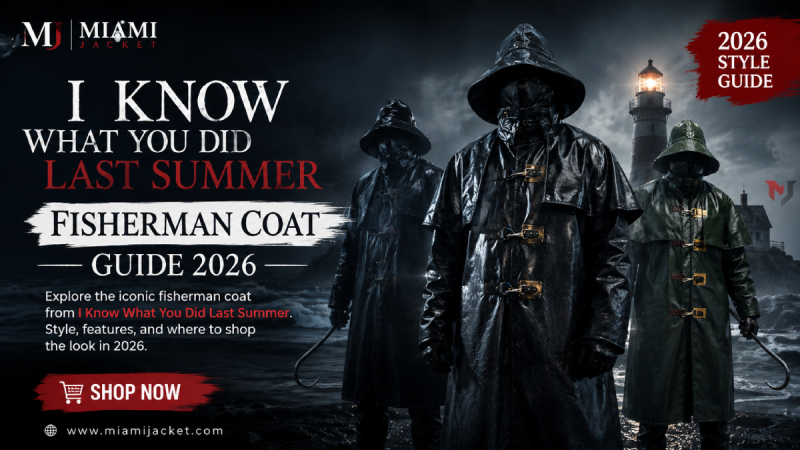
I Know What You Did Last Summer Fisherman Coat 2025 – Buy the Screen-Accurate Look
There's a reason a single rain-soaked figure in a long dark coat has stayed in people's heads for almost thirty years. No mask, no supernatural backstory, just a man in a slicker standing on a pier. That image is exactly what the 2025 film brought back to theaters, and it's exactly why so many horror fans are now searching for their own version of that coat.
If you've landed here after watching the new movie or scrolling through fan edits of Ben Willis on social media, you're probably wondering where to actually buy one that looks right — not a flimsy costume-store raincoat, but something with real weight, real stitching, and the kind of silhouette that holds up under a camera flash at a convention or a porch light on Halloween night. That's what this guide is for.
We're going to walk through the full story behind the coat, what separates a genuine I Know What You Did Last Summer Fisherman Coat from a cheap knockoff, how to pick the right size and material, and where this piece fits whether you're building a horror costume, decorating a collection shelf, or just adding a statement outerwear piece to your closet. By the end, you'll know exactly what to look for before you spend your money.
A Quick Recap: Who Is the Fisherman, and Why Does This Coat Matter?
For anyone who hasn't seen the original film or needs a refresher before the 2025 sequel, the character known as the Fisherman is Ben Willis — a man involved in a hit-and-run that four friends try to cover up. A year later, someone in a hooded slicker starts hunting them down with an ice hook, and that hooded figure became one of the most recognizable images in 90's horror.
What made the look work wasn't gore or a monstrous design. It was the opposite. The coat looked like something a real dockworker would wear. Heavy, weatherproof, practical. That ordinariness is what made him unsettling — he looked like he belonged on that pier, right up until he didn't.
The Fisherman Costume's history actually ties back to real rain gear worn by fishermen along the North Carolina coast, where the original story is set. The production team leaned into that authenticity instead of designing something theatrical, and audiences responded to it. Decades later, that same design language is what the new film's costume department pulled from when building the 2025 version, keeping the coat close to its roots while updating the materials and fit for a modern shoot.
That's the entire reason a Fisherman Coat 2025 is worth talking about. It's not a random horror hoodie or a printed graphic tee. It's a faithful reproduction of a costume that was built to look believable in the first place, which means getting it right actually matters.
.png)
What Makes a Coat "Screen-Accurate"
This term gets used loosely across a lot of costume and cosplay sites, so it's worth being specific about what it should actually mean.
A screen-accurate fisherman coat should match the film reference in four places:
Silhouette – A long cut that falls past the knee, with enough drape to move like real rain gear instead of a stiff Halloween prop.
Collar and closure style – The original design uses a raised, functional collar and front closures that look built for weather, not decoration.
Color and texture – Deep black or dark olive tones with a slightly rugged, matte finish rather than a shiny, plastic-looking coating.
Hood proportion – Oversized enough to cast a shadow over the face without looking cartoonish.
A lot of mass-produced Halloween costumes get the color close but completely miss the weight and drape, which is the first thing people notice in photos. If a coat looks too clean, too glossy, or too short, it won't read as the character — it'll read as a costume.
Fisherman Slicker Coat: Material and Construction Breakdown
This is where the real difference between a $40 costume-store version and a proper I Know What You Did Last Summer Coat shows up.
Leather construction gives you the weight and structure that PVC or thin polyester simply can't replicate. A genuine leather build:
Holds its shape on the shoulders and drapes naturally at the hem instead of clinging or ballooning
Ages well, developing a slightly worn texture over time instead of cracking after a few wears
Feels substantial when you move, which matters a lot if you're wearing it for hours at a con or a party
Photographs better under both flash and low light, since leather absorbs light instead of reflecting it like plastic does
Stitching detail is the next giveaway. Look for reinforced seams at the shoulders and cuffs, a properly finished hood edge, and a lining that doesn't bunch up when the coat is buttoned. Cheap versions often skip lining entirely, which is obvious the moment you put one on in cooler weather.
Hardware — the buttons, toggles, or clasps — should feel solid, not like something that will snap off after two wears. On a well-made Ben Willis Fisherman Coat, the closures are functional and match the utilitarian look of the original, not oversized costume-shop buttons that scream "prop."
If you're comparing two listings and one is dramatically cheaper, the material is almost always where the corners got cut.
How the 2025 Costume Differs From the Original Film
If you've watched both films back-to-back, you'll notice the new movie didn't just copy-paste the old costume — it refined it. The core silhouette remained untouched because changing it would have undermined the character's whole point, but a few things shifted for modern production.
Fabric technology has moved on since the late 90's. The 2025 version uses heavier, more weather-resistant materials that hold their shape better under studio lighting and during outdoor night shoots, which is part of why the coat looks so crisp in trailer footage compared to the slightly looser original.
Color grading on screen also plays a role in how people perceive the coat. The new film leans into a deeper, more saturated black-green tone rather than the flatter black of the original, which is why you'll see product listings offering both a true black and an olive-black variant — sellers are matching two slightly different film references.
The hood shape got a subtle adjustment, too. It sits slightly higher off the shoulders in the new costume, giving a sharper shadow line across the face in low light. It's a small change, but it's the kind of detail that separates a listing built by someone who actually studied the reference stills from one that just copied the general idea of "long black coat with a hood."
None of this means the character changed. It means the costume department clearly respected what already worked and made careful, intentional updates rather than a redesign, which is exactly the standard a good replica should be held to.
Why the Fisherman Still Works as a Horror Icon
It's worth pausing to consider why this particular horror movie villain coat has remained relevant for almost thirty years, while so many other slasher looks from the same era have faded into nostalgia-only territory.
Most horror icons rely on something exaggerated — a mask, a supernatural ability, an impossible weapon. The Fisherman has none of that. He's a man in weatherproof gear that anyone could own. That grounded, plausible design is what makes people uneasy in a way a fantastical costume never quite manages. You could genuinely see someone wearing this coat on a real dock, which is exactly what makes it unsettling when you realize who's underneath the hood.
That same principle is why the coat works as a standalone fashion piece and not just a costume. It doesn't scream "Halloween prop." A long, structured, dark coat with a dramatic collar is genuinely striking on its own, horror reference or not. That crossover appeal is a big part of why searches for this specific piece spike well before Halloween and stay steady through the winter months, driven by both horror fans and people who've simply seen the silhouette and want it in their wardrobe.
Who Actually Buys This Coat (And Why)
It's easy to assume this is purely a Halloween item, but the audience is broader than that, and it's worth knowing which category you fall into before you buy, since it affects sizing and finish choices.
Horror collectors and prop enthusiasts want museum-quality accuracy. They're comparing stitching against film stills and care more about authenticity than comfort.
Cosplayers and convention-goers need something that photographs well and holds up over a full day of wear, walking, posing, and crowds. Comfort and durability matter here as much as looks.
Halloween shoppers want maximum visual impact for one night, so the dramatic silhouette and hood shadow effect are the priority.
Every day, horror-fashion wearers are a newer but growing group — people who've realized a long, structured leather coat with this kind of dramatic collar actually works as a genuine outerwear piece outside of October. Dark academia and gothic streetwear trends have made pieces like this crossover into regular wardrobes, paired with boots and layered knitwear.
Whichever group you're in, the good news is that a well-made Fisherman Coat 2025 genuinely works for all four use cases, because the construction quality doesn't change — only how you style it does.
There's also a fifth, smaller group worth mentioning: gift buyers. A surprising number of orders for costume-accurate horror outerwear come from people shopping for a partner, sibling, or friend who's a known horror fan. If that's you, the sizing guide further down in this piece is worth reading closely before you buy, since fit is the one thing you can't easily judge from a photo.
Common Mistakes People Make When Buying a Costume Coat Like This
After seeing enough listings and enough disappointed reviews across costume marketplaces, a pattern shows up in what goes wrong. Avoiding these mistakes will save you both money and a returned package.
Judging quality purely from the product photo. Studio lighting and a good photographer can make thin PVC look convincingly like leather in a thumbnail. Always check the material listed in the description, not just the image.
Ignoring the size chart. Because this is a long coat, a size that's slightly off doesn't just feel uncomfortable — it visibly ruins the silhouette. A coat that stops mid-thigh instead of mid-calf loses the entire dramatic effect the design depends on.
Buying the cheapest option without checking seller reviews. In a niche market like movie-accurate costuming, price differences usually reflect real differences in material and stitching quality, not just markup. A listing priced dramatically below similar competitors is worth a second look before you commit.
Assuming all "fisherman coat" listings are the same character. Fisherman-style raincoats show up across multiple horror and non-horror contexts. Double-check that the listing specifically references this film and this character before buying, especially if screen accuracy matters to you.
Forgetting to check what's included. Some listings are coat-only, others bundle a hat or gloves. If you need a complete look, confirm exactly what ships before you check out.
Quick Buying Checklist Before You Check Out
Before you add anything to your cart, run through this short list:
Material is clearly stated as genuine leather, not just "leather-look" or unspecified fabric
The size chart is available, and measurements are given in both inches and centimeters
Product photos show the coat from multiple angles, including the hood and back
Seller has visible reviews or ratings from previous buyers
Return or exchange policy is clearly listed in case the fit isn't right
Listing specifies whether accessories like gloves or a hat are included
Running through this before checkout takes less than two minutes and avoids the most common regrets buyers report with costume and replica outerwear.
How to Style the Fisherman Coat Beyond Halloween
If you want this piece to earn its price tag past a single night, here's how it fits into a wider wardrobe.
For a costume-accurate look: Pair it with black boots, dark gloves, and keep everything else minimal. The coat should be the entire statement. Avoid adding extra props unless you're going for a full character recreation — simplicity is what made the original design effective.
For streetwear styling: Wear it open over a plain black or olive base layer with slim trousers. This is a great option to browse alongside other winter leather jackets if you want a piece that reads as edgy but still wearable in daily rotation during colder months.
For layered gothic or dark-academia fits: Add a turtleneck underneath, combat boots, and minimal silver jewelry. The oversized collar and hood already do most of the visual work, so keep accessories simple.
For a full themed outfit: If horror-inspired fashion is your thing beyond just this one coat, it's worth browsing broader movie jackets collections to build out a full themed rotation for conventions, photoshoots, or just standing out.
For everyday practical wear: Because the coat is genuinely long and weatherproof-styled, it holds up in actual rain and wind, not just as a costume piece. If you're putting together men's outfits for colder, wetter climates, a structured long coat like this can double as functional outerwear that also happens to have a story behind it.
Sizing and Fit Guide
Getting the fit right matters more with a long coat than almost any other garment, because a poor fit is immediately obvious in a silhouette this dramatic.
Shoulder width should sit close to your natural shoulder line. Too wide and the coat looks borrowed; too narrow and it restricts movement.
Length is the defining feature of this design — it should fall to at least mid-calf. If it stops above the knee, it loses the entire visual effect the character is known for.
Sleeve length needs to reach the wrist without bunching, since the hands and gloves are a key part of the silhouette.
Chest room should allow a layer underneath, especially if you're wearing it in actual cold weather rather than just for a few hours at an event.
Always check the seller's specific size chart rather than assuming standard sizing, since coat proportions vary between brands. If you're between sizes, sizing up is generally safer for this particular silhouette, since the look benefits from a slightly looser, heavier drape.
Real Leather vs. Faux Leather vs. PVC: Which Should You Buy?
This is the most common decision point, so here's a straightforward comparison.
Real leather offers the best durability, the most authentic drape, and ages naturally rather than degrading. It costs more upfront but lasts for years of repeated wear, whether that's annual Halloween use or regular convention appearances. It's the closest match to the actual on-screen texture.
High-quality faux leather is a reasonable middle ground if you want the look without the higher price point. Quality varies enormously between sellers, so check for reinforced stitching and a matte (not shiny) finish before buying.
PVC or vinyl costume versions are the cheapest option and the least durable. They tend to crack in cold weather, feel stiff when moving, and rarely hold up beyond a season or two. These are fine for a single-use costume on a tight budget but aren't a good investment if you want something that lasts.
If budget allows, real leather is worth it — not just for longevity, but because it's the only option that genuinely replicates the weight and movement of the original screen costume.
Care and Maintenance Tips
Once you own the coat, keeping it in good shape isn't complicated, but a few habits make a real difference over time.
Store it on a sturdy, wide hanger rather than folded, so the shoulders keep their shape.
Keep leather away from direct heat sources like radiators, which can dry it out and cause cracking.
Use a proper leather conditioner every few months if you're wearing it regularly, especially through winter.
If it gets caught in rain, let it air dry away from direct sunlight rather than using a heater or hairdryer to speed things up.
Spot clean rather than machine washing — leather and most quality faux-leather builds don't hold up to a washing machine cycle.
Treated properly, a genuine leather coat like this can last for years of repeated wear, whether you're bringing it out every October or wearing it as part of your regular winter rotation.
What to Look for in a Seller
Not every store selling a Cosplay Leather Coat inspired by this film actually specializes in movie and costume outerwear, and that difference shows up the moment the package arrives. A seller who genuinely focuses on film-accurate leather jackets and coats will usually have a few things a generic dropshipping storefront won't.
Detailed size charts specific to the coat, not a generic one copied and pasted across every product on the site. Long coats fit differently from jackets or shirts, and a seller who understands that will provide chest, shoulder, sleeve, and full-length measurements rather than just S/M/L labels.
Clear material sourcing information. Reputable sellers will tell you exactly what the coat is made from — genuine leather, faux leather, or another material — rather than using vague marketing language that avoids the question entirely.
Customer photos or reviews, ideally showing the coat worn rather than just studio shots. Real buyer photos are one of the best ways to judge how a coat actually drapes on different body types, since professional product photography can be deceiving.
A responsive support channel for sizing questions before you buy. If you're unsure between two sizes, a seller who actually knows their product will be able to advise based on your measurements rather than giving a generic answer.
This matters more with a piece like this than with basic clothing, because you're paying for accuracy and craftsmanship, not just fabric. A seller that treats it as a specialty costume piece — rather than one SKU among thousands of unrelated products — is far more likely to get the details right.
Caring for Your Coat Long-Term
Beyond the basic maintenance already covered, a few extra habits will keep a genuine leather Fisherman Slicker Coat looking sharp for years rather than one season.
Rotate storage seasons. If you're only wearing it around Halloween or for occasional events, don't leave it compressed in a packed closet year-round. Give it breathing room on a hanger, ideally under a breathable garment bag rather than plastic, which can trap moisture and cause the leather to dry out unevenly.
Address stains immediately. Leather is more forgiving than fabric when it comes to spills, but the longer a stain sits, the harder it is to lift. A soft cloth and a leather-safe cleaner used right away will save you from a permanent mark later.
Watch for cracking near the fold lines. Because this coat spends time on a hanger with sleeves hanging naturally, cracking is more likely at elbow creases if the leather dries out. Conditioning every few months, especially before a heavy-use season like Halloween, keeps the material flexible.
Keep hardware clean. Buttons, toggles, or clasps can tarnish or stick if they're not wiped down occasionally, especially if the coat has been worn in humid or rainy conditions consistent with its weatherproof design.
Treat it less like a costume you'll wear once and more like a genuine leather outerwear investment, and it'll reward you with years of use rather than a single Halloween night before it ends up in a donation pile.
Final Thoughts: Is It Worth Buying?
A costume built on subtlety is a strange thing to try to recreate, because there's nowhere to hide a bad build. No mask to distract from cheap stitching, no elaborate prop to pull focus from a coat that doesn't sit right. Every detail is out in the open, which is exactly why the material and construction matter as much as the design itself.
If you're buying a Fisherman Coat 2025 for a one-time costume party on a tight budget, a lower-cost version might do the job for a single night. But if you want something that photographs well, holds up across multiple wears, and actually earns its place in a Halloween costume rotation or a genuine cold-weather wardrobe, it's worth spending on a version built in real leather with proper stitching and a correctly proportioned hood.
That's really the whole decision. Get the silhouette right, get the material right, and you've got a piece that works whether you're recreating Ben Willis on a foggy porch this October or just wearing a genuinely well-made long coat through winter.
Frequently Asked Questions (FAQ’s)
Is the I Know What You Did Last Summer Fisherman Coat made from real leather?
Quality versions are built from genuine leather for accuracy and durability, though faux leather and PVC alternatives exist at lower price points. Real leather offers the closest match to the original screen texture and lasts significantly longer.
What's the difference between a costume version and a screen-accurate version?
A costume version usually prioritizes low cost and quick production, often using thin PVC and simplified stitching. A screen-accurate version matches the actual silhouette, collar detail, hood proportion, and material weight seen in the film.
Can I wear this coat outside of Halloween?
Yes. Because of its long, structured design, it works well as genuine winter outerwear, especially paired with darker, minimal outfits. Many buyers wear it as a standalone statement coat well beyond October.
What size should I order?
Check the seller's specific size chart rather than relying on standard clothing sizes, since coat proportions differ by brand. Sizing up slightly is generally recommended for the correct dramatic drape.
Does the coat come with the hat, gloves, or hook accessory?
This depends entirely on the seller and specific listing. Some sell the coat alone, others offer it as part of a bundle. Always check the product description before buying if you need a complete costume set.
Is this coat only for cosplay?
No. While it's popular for cosplay, Halloween, and prop collecting, its structured, weatherproof-inspired design also makes it a functional piece of outerwear for anyone who likes darker, statement-heavy fashion.
How is this different from a generic black raincoat?
A screen-accurate version is cut specifically to match the film's proportions — a longer hem, a more dramatic collar, and a deeper hood shadow than a standard raincoat offers. It's also typically built from heavier material meant to hold its shape rather than lightweight fabric designed purely for waterproofing.
Will the coat feel heavy or uncomfortable to wear for a full event?
A well-constructed leather version distributes weight evenly across the shoulders and shouldn't feel restrictive. It's noticeably heavier than a thin costume-store version, but that weight is exactly what gives it the correct drape and movement, and most buyers report it's comfortable over several hours once broken in.
Leave a Comment